.png)
News, Films
How My Roots in Varanasi Shaped My Creative Identity
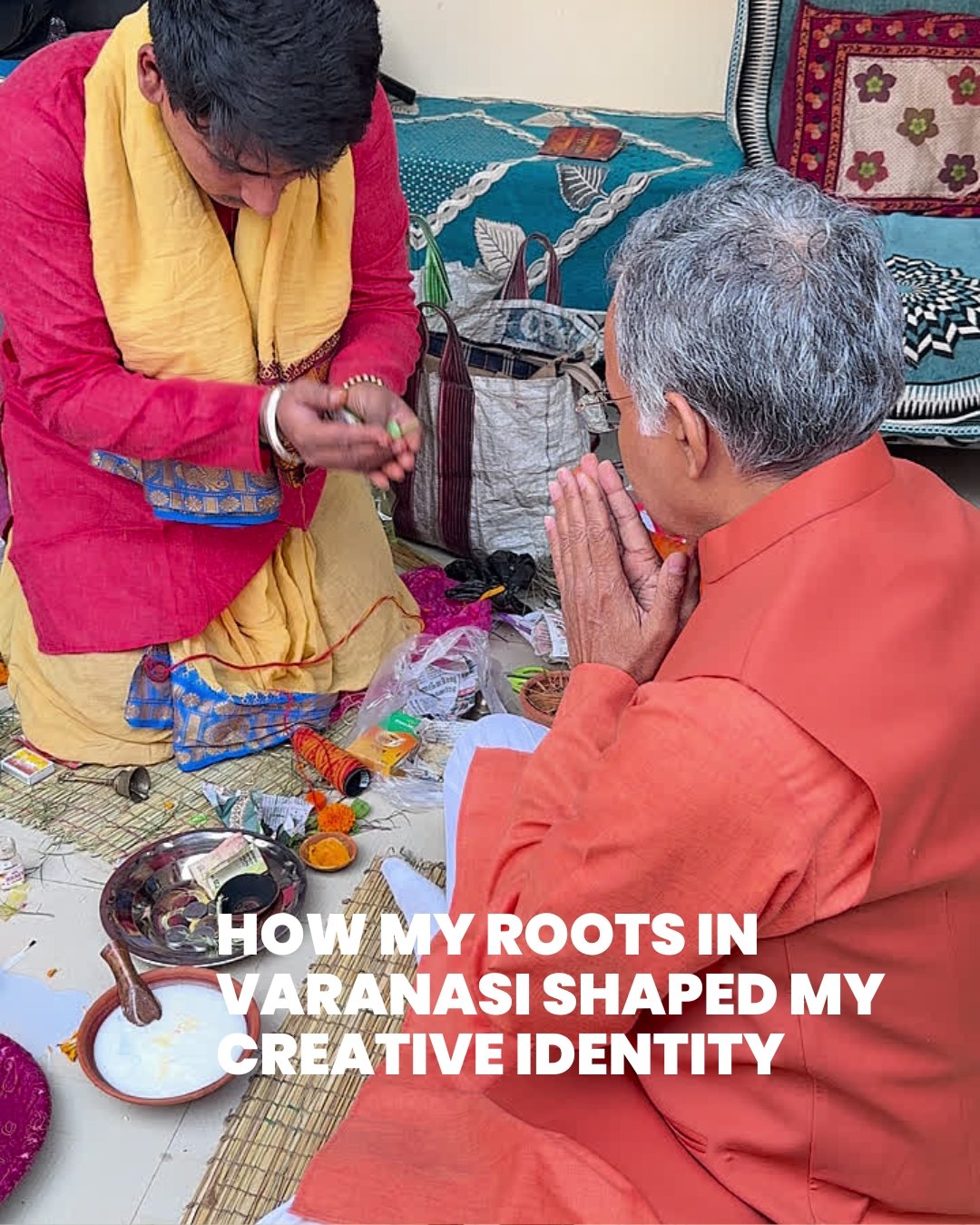
On the morning of November 18, 2024, I stood on the banks of the Ganga in Varanasi as Pandit
Sourav Banerjee guided us through the opening puja ceremony for Avyaan. The fire was lit. The
mantras were spoken. The river moved, as it always does, indifferent to everything except the
permanence of its own flow.
I had been to Varanasi before. Most Indians have. But standing there that morning, not as a
visitor, not as a tourist, but as someone beginning something new — a film, a creative chapter, an
act of cultural commitment — the city felt entirely different.
That is the thing about Varanasi. It does not stay the same from visit to visit. It speaks to you
differently depending on where you are in your own journey.
That morning, it spoke to me about roots. About what it means to know where you come from.
And about how that knowledge shapes everything you eventually create.
What Varanasi Actually Is
People who have never been to Varanasi sometimes struggle to understand what makes it
different from other historic Indian cities. It is not simply a matter of age, though Varanasi is
among the oldest continuously inhabited cities in the world. It is not simply a matter of religious
significance, though it holds deep meaning for millions of people.
Varanasi is different because it has never stopped being itself. While much of the world has
remade itself in the image of modernity — tearing down and rebuilding, updating and
optimising — Varanasi has simply continued. The ghats, the alleyways, the temples, the daily
rhythms of life and death along the river: they carry forward a way of being that is thousands of
years old, not as a museum piece, but as a living, breathing reality.
For a creative person, this is profound. When you spend time in a place that has held human
memory and meaning across centuries, something shifts in how you think about what you are
making. The question stops being what is new? and becomes what is true?
That is the question Varanasi asked me.
Why We Chose Varanasifor Avyaan
The decision to begin Avyaan in Varanasi was not incidental. It was central to what the film is
trying to say.
Avyaan — which means the one who is complete and unwavering — is a story about inner
strength and rooted identity. It is a film that asks its audience to slow down, to look inward, and to
reconnect with what actually matters. Those are not themes you can explore in a neutral setting.
They need a place that embodies them.
Varanasi embodies them completely. The city is, in itself, a meditation on permanence in the
middle of constant change. The Ganga flows. The ceremonies continue. The rituals that were
performed here a thousand years ago are performed here today. And yet the city is never static —
it is full of life, of commerce, of argument, of beauty, of loss.
Our director, Gaurav Khati, understood this. So did our cinematographer, Chandan Kowli. The
visual language of Avyaan — captured at the golden riverside at dusk, in the quiet corners of the
ghats, in the textures of a city that refuses to be photographed quickly — is inseparable from
what Varanasi is.
When Anushka Kaushik, our lead actress, described the shoot as a spiritual experience, she was
not using the word loosely. Varanasi does something to people who open themselves to it. It
slows you down in the best possible way.
What Varanasi Taught Me About Creative Identity
I grew up in Jaipur. I have spent most of my adult life in Bangkok. My cultural identity has always
been something I carry with me — not a location but a set of values, stories, and practices that I
try to honour wherever I am.
But spending time in Varanasi while making Avyaan reminded me that cultural identity is not
only something you carry. It is also something that certain places hold for you — safeguard on
your behalf, so that when you return, you find it waiting.
What Varanasi held for me was a reminder of simplicity. Not simplicity in the sense of being
unsophisticated — Varanasi is intellectually and spiritually complex. But simplicity in the sense
of knowing what matters. The city strips away the noise. You cannot be in Varanasi and remain
preoccupied with surface things.
That clarity became the creative foundation for Avyaan. As I said when we announced the film:
"Avyaan is about returning to simplicity. It reflects who we are — through emotion, tradition, and
the lens of culture." Varanasi is where that conviction became something I could actually feel, not
just articulate.
The puja ceremony that Pandit Sourav Banerjee led on that November morning set the tone for
everything that followed. The team — Nivaan Sen and Neelu M. Sen of Urban Boat Films,
director Gaurav Khati, and every person who showed up that day — participated with sincerity.
There was no hurry. There was no performance. There was only the intention to begin well and to
honour what we were doing.
I believe that the spirit in which you begin a creative project follows it all the way through.
Civilizational Roots and Creative Work
There is a broader point here that I find myself thinking about more and more.
We live in a time when creative work is often evaluated primarily on novelty — on what is new,
what is different, what has not been seen before. That is one kind of value, and I do not dismiss it.
But it is not the only kind.
There is also the deeply rooted value of work. Work that comes from a real place, reflects
real experience, and carries the weight of something that has been lived rather than imagined
from the outside. Indian storytelling — at its best — has always had this quality. The great epics,
the folk traditions, the classical forms: they are not rootless experiments. They grow from the soil
of a specific civilisation, a specific relationship with life, death, time, and meaning.
Avyaan is my attempt to participate in that tradition as a producer. Not to replicate it
mechanically, but to bring its spirit into a contemporary cinematic form — one that speaks to
audiences today without abandoning what makes Indian storytelling distinctive.
Varanasi made that intention concrete for me. It showed me what it looks like to be rooted
without being frozen, to be ancient without being irrelevant.
A City That Changes You
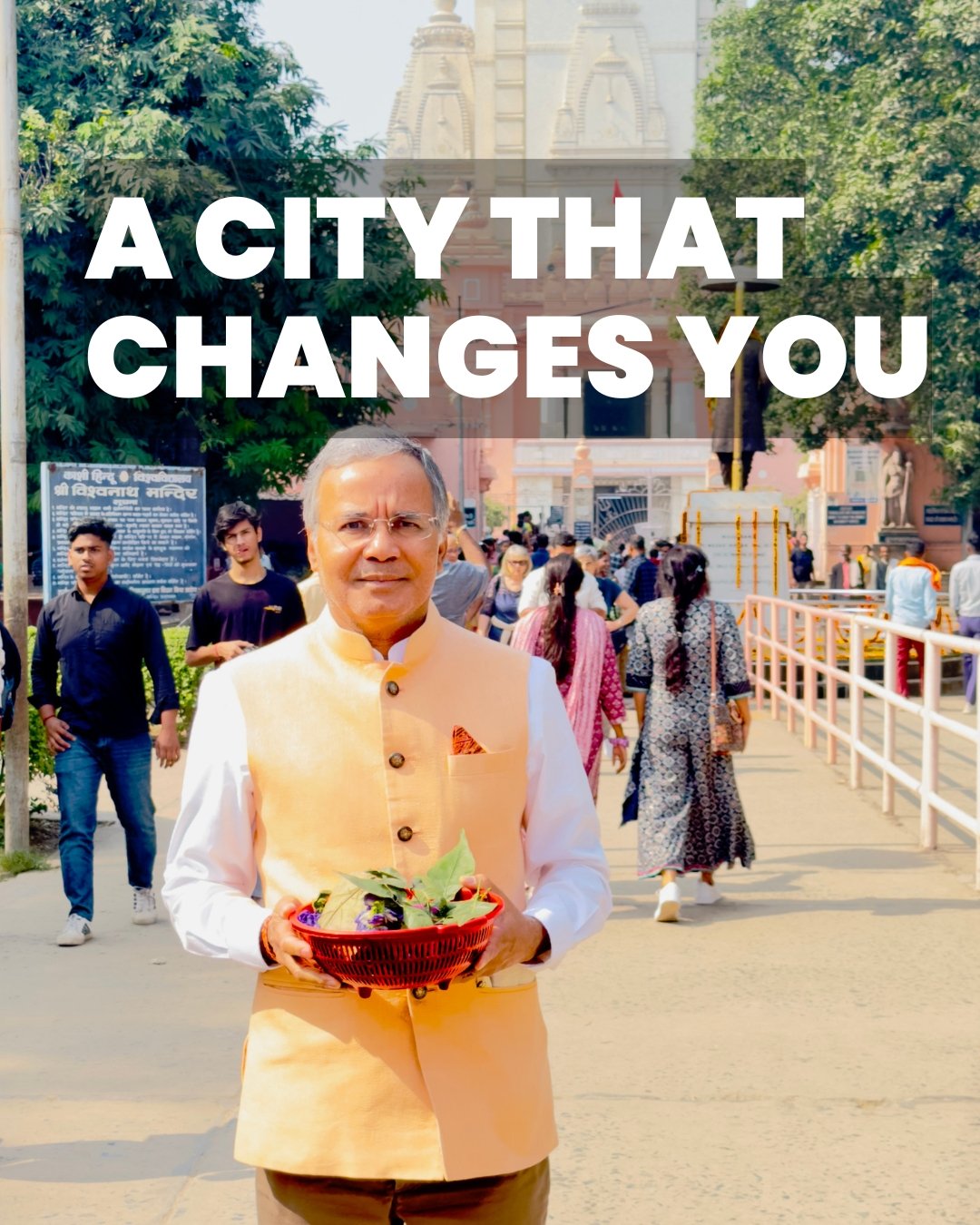
If you have been to Varanasi, you may already know what I am trying to describe. If you have not,
I find it difficult to fully convey in words — and I say that as someone who has just spent
considerable effort trying.
What I can say is this: Varanasi does not make you feel small. It makes you feel placed. Located.
Part of something that extends far beyond your individual story. That feeling, for me, was the
beginning of my creative identity as a filmmaker.
I came to Varanasi with a project. I left with a perspective.
That perspective is in Avyaan. I hope, when the film is released, audiences will feel something of
what that city gave to us — the stillness, the depth, and the quiet insistence that some things are
worth returning to.